Planning & Research Studies

Planning & Research Studies

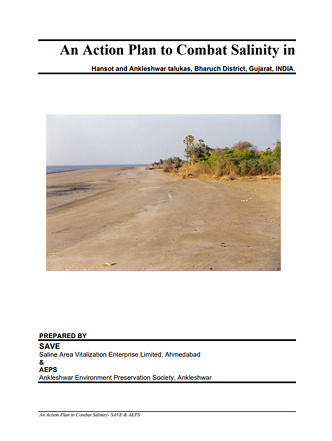
  • An Action Plan to Combat Salinity

    The Study on Water Logging and Salinity in Ankleshwar–Hansot addresses the growing degradation of agricultural land and water resources in Bharuch district, Gujarat. The introduction of perennial canal irrigation under the Ukai–Kakrapar Right Bank Canal system increased agricultural productivity but also caused water logging and soil salinity. Nearly half of the region’s cultivable land is now affected, threatening farmers’ livelihoods and ecological sustainability.

    Led by the Ankleshwar Environmental Preservation Society (AEPS) under the guidance of Mr. D. A. Anandpura, the initiative brought together farmers, government agencies, and technical experts. Supported by GNFC, GSFC Science Foundation, NADA Ankleshwar, and Oxfam (UK), the study developed a participatory Action Plan to restore land productivity and promote sustainable natural resource management through public–private and community partnerships.

    PDF Icon download pdf
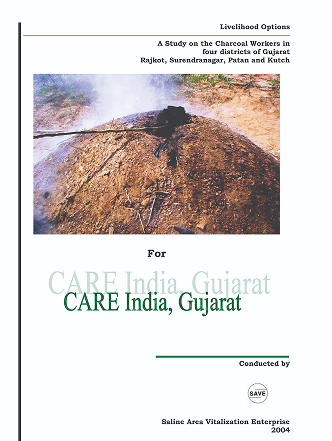
  • A Study of Charcoal Workers Rajkot, Surendranagar, Patan and Kutch (2004 - 2005)

    This study looks at charcoal making as an important source of livelihood for poor and marginalized families living in drought-prone and semi-arid areas of Little Rann of Kutch, Gujarat. Many households depend on charcoal work for their daily income and employment. Although charcoal production is often considered harmful to the environment, the study highlights that it can be done in a more sustainable way if properly managed. The study focuses on the living and working conditions of charcoal workers, the environmental and economic effects of charcoal production, and the main policy and legal issues, to help NGOs and development agencies plan better livelihood support and interventions.

    PDF Icon download pdf
  • Pinch of Salt

    Under the SNEHAL (Sustainable Nutrition, Education, Health and Livelihood) programme, CARE India commissioned study on saltpan workers (Agarias) in Gujarat. The study covered 16 villages across Kutch, Patan, Rajkot, and Surendranagar districts and document the life and living of small salt producers (agariyas) engaged in production of marine and inland salt in Little Rann of Kutch, Gujarat.

    Through household surveys, focus group discussions, and consultations with key stakeholders, the study highlighted critical issues such as unsafe and harsh working conditions, health vulnerabilities, gender inequities, exploitative market systems and limited access to basic services and entitlements. The findings provide a strong evidence base to design rights-based, community-led interventions aimed at strengthening livelihood security, resilience, and dignity of small saltpan worker communities.

    PDF Icon download pdf
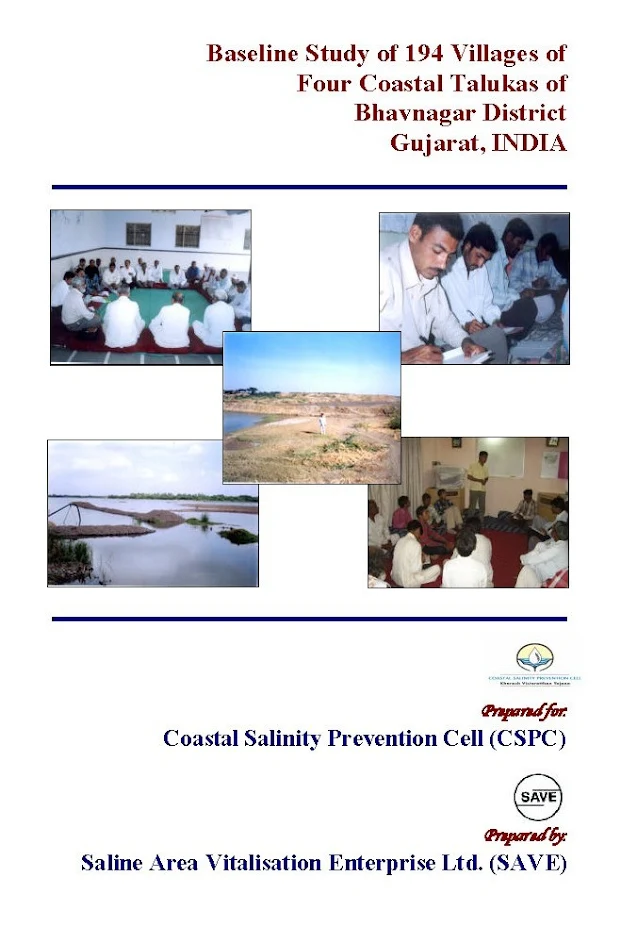
  • Baseline Assessment of Coastal Salinity and Livelihoods Bhavnagar District, Gujarat (2006–2007)

    Salinity of land and water poses a serious challenge to coastal communities in Gujarat, affecting agriculture, livelihoods, and access to safe drinking water. To address this issue, the Coastal Salinity Prevention Cell with support from government departments and NGOs, conducted village-level baseline studies during 2006–2007. The pilot study covered 194 villages in Ghogha, Bhavnagar, Mahuva, and Talaja talukas of Bhavnagar district and highlighted high levels of vulnerability, especially among poor households in saline-affected areas.

    PDF Icon Download PDF
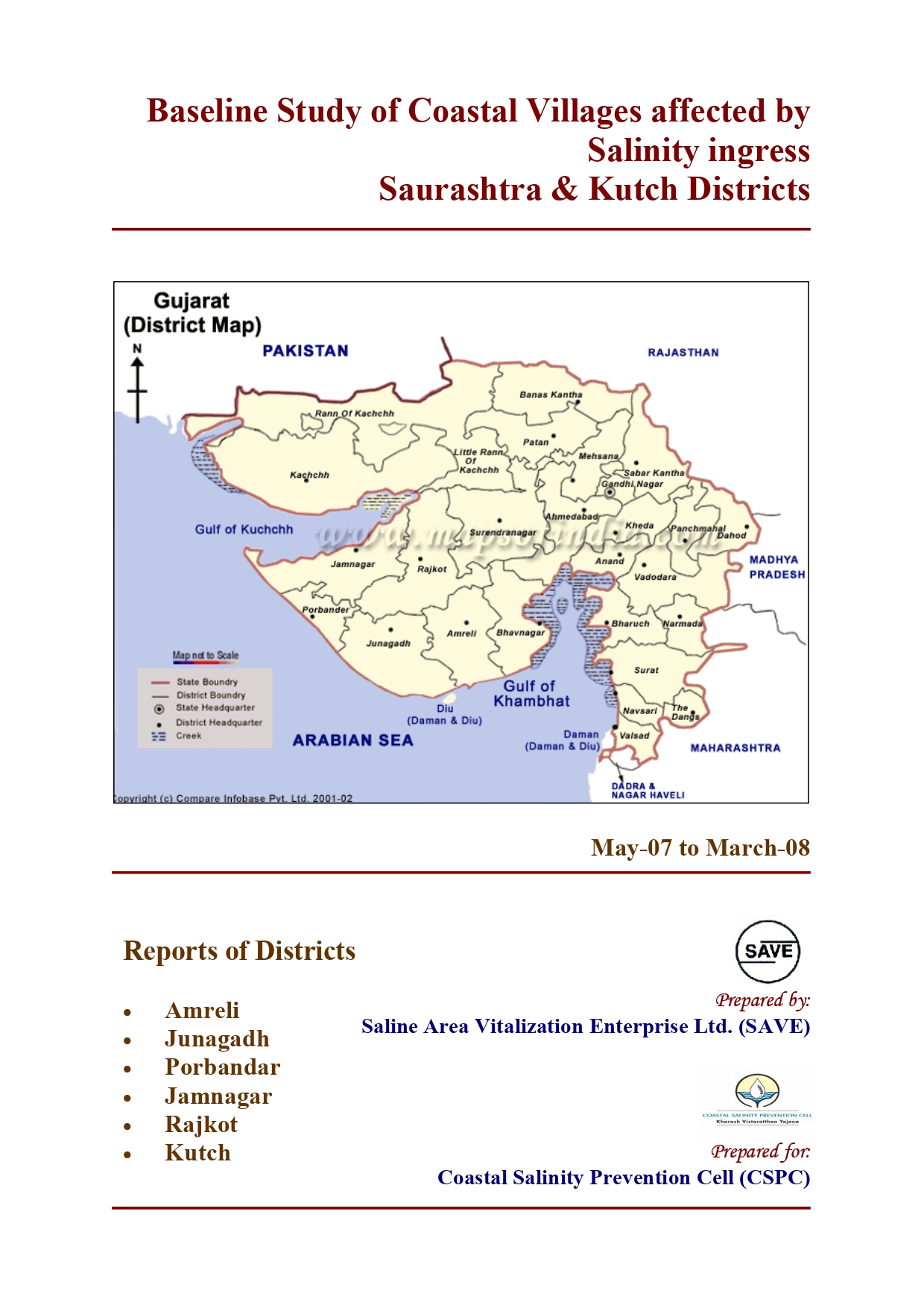
  • Baseline Assessment of Coastal Salinity & Livelihoods Surendranagar Region & Kutchh District, Gujarat (2007-2008)

    Based on the pilot experience, similar participatory baseline studies were carried out by Saline Area Vitalisation Enterprise (SAVE) Pvt. Ltd. in other coastal districts of Saurashtra and Kutch, including Amreli, Junagadh, Porbandar, Jamnagar, Rajkot, and Kutch. These studies assessed salinity impacts on land and water, livelihoods, agriculture, and drinking water access. The findings supported planning of targeted salinity control measures, improved water management, and livelihood diversification to strengthen the resilience of coastal communities.

    PDF Icon Download PDF
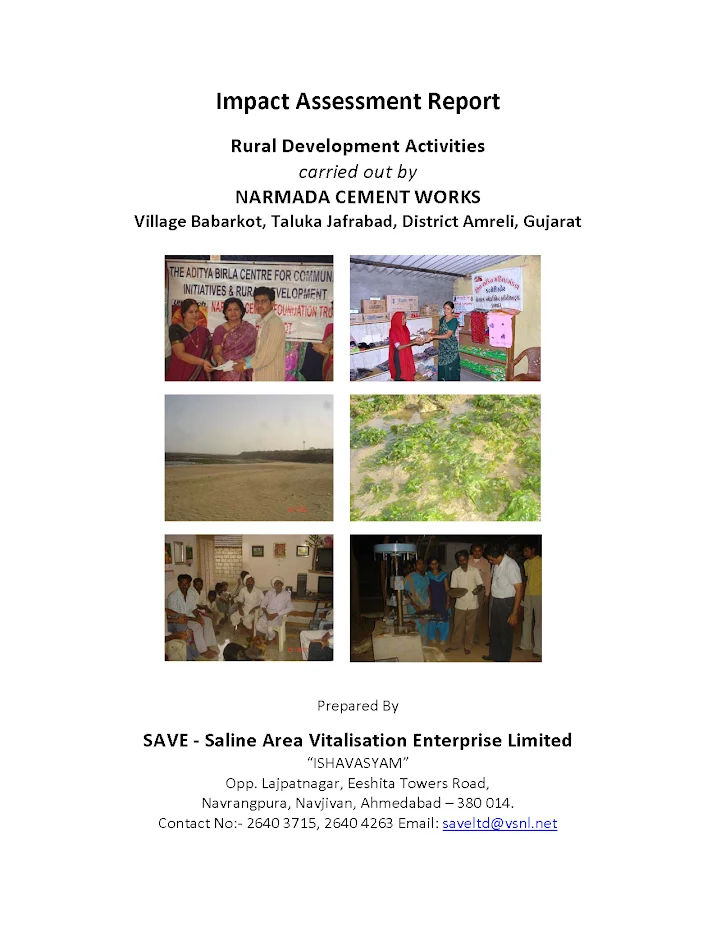
  • Impact Assessment - Rural Development Activities Babarkot, Ta. Jafrabad, Dist. Amreli, Gujarat (2010)

    SAVE – Saline Area Vitalisation Enterprise Ltd. carried out an impact assessment of rural development activities implemented by Narmada Cement Works in villages around Babarkot, Taluka Jafrabad, Amreli district in March 2010. The assessment was based on field visits, community consultations, and discussions with company officials. The study found that the CSR initiatives have contributed significantly to improving education, healthcare, infrastructure, livelihoods, and overall living conditions in the project villages.

    Improved access to schools, medical services, drinking water, roads, and employment opportunities has led to higher household incomes and reduced out-migration. Initiatives in agriculture, animal husbandry, women empowerment, sanitation, and water conservation further strengthened community resilience. While the programmes have had a positive impact, the assessment also highlighted the need for wider community inclusion, stronger sustainability of interventions, and enhanced focus on women-centred development. Overall, the study demonstrates the positive role of structured CSR efforts in supporting sustainable rural development.

    PDF Icon Download PDF
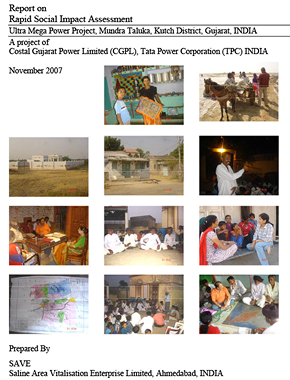
  • Rapid Social Impact Assessment UMPP, Mundra, Gujarat India (2007-2008)

    Tata Power’s 4000 MW Ultra Mega Super-Critical Thermal Power Project (UMPP) was being setup near Tunda village, Mundra taluka, Kutch, Gujarat. The project was implemented by Coastal Gujarat Power Ltd. (CGPL).

    As part of Tata Group’s commitment to sustainable development, CGPL commissioned a Rapid Social Impact Assessment (RISA) to SAVE Pvt Ltd. to understand potential social impacts, identify opportunities for local communities, and develop mitigation measures. The assessment ensures that the project meets both Indian and IFC social performance standards while supporting local livelihoods and responsible development.

    PDF Icon download pdf
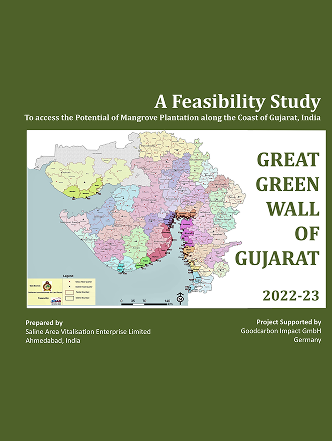
  • Feasibility Study Coast of Gujarat (2022-23)

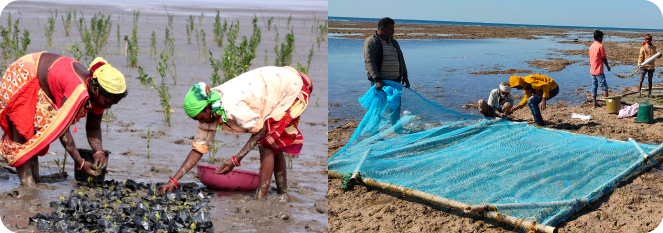
    The Great Green Wall of Gujarat (GGWG) is a joint initiative of VIKAS Centre for Development, SAVE Limited, and Goodcarbon GmbH, Germany. The project aims to create a large green belt along the Gujarat coast through community-led mangrove and mixed-species plantations. About 20,000 hectares of coastal land will be covered to protect the environment and reduce the impact of climate change. Mangroves will help absorb carbon, protect the coastline, and improve local ecosystems.

    The project builds on more than 25 years of mangrove plantation work done by VIKAS CFD and SAVE in Gujarat. To plan the work properly, a feasibility study was carried out across coastal villages of Gujarat. The study looks at land conditions, community interest, and government permissions.

    PDF Icon download pdf
  • Baseline Need Assessment Study Mundra & Mandvi Taluka, Kutchh District (2022-23)

    This Baseline and Need Assessment Study was carried out in Mundra and Mandvi talukas of Kutch district, covering 18 villages. The study used Census data and village-level surveys to understand local needs and conditions. It looks at key social, economic, and environmental issues affecting communities. The findings will support need-based planning and effective development interventions by Adani Foundation.

    PDF Icon download pdf
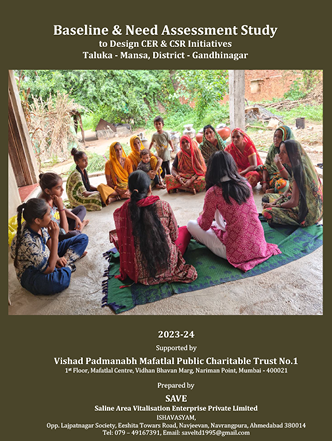
  • Baseline Need Assessment Study Mansa Taluka, Gandhinagar District (2023-24)

    This study was conducted in 10 villages of Mansa taluka, Gandhinagar district, by Vishad Padmanabh Mafatlal Public Charitable Trust. SAVE Pvt. Ltd. carried out the baseline and need assessment to plan a long-term rural development programme. The study looked at the social, economic, and physical conditions of the villages. It focused on identifying the real needs of local people, especially women and marginalized communities. Existing government schemes and programmes were also reviewed for better coordination. Information was collected through village surveys and group discussions. The findings will guide effective planning and implementation of development initiatives.

    PDF Icon download pdf
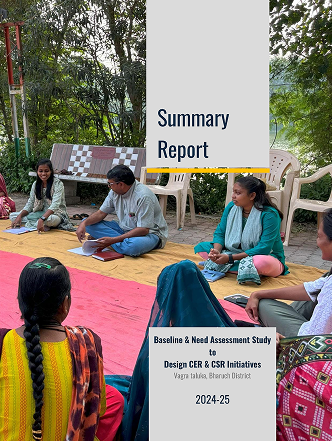
  • Baseline Need Assessment Study VagraTaluka, Bharuch District (2023-24)

    SAVE – Saline Area Vitalisation Enterprise Pvt. Ltd., conducted a Need Assessment & Baseline survey covering ten villages of Vagra Taluka, Bharuch district, to facilitated preparation of CSR and CER initiatives for Adani Cement Industries Ltd., Bharuch, Gujarat.

    The Study covered 5,190 households and a population of 31,833, and assessed key indicators related to livelihoods, health, education, infrastructure, environment, and social inclusion. The findings provide a data-driven foundation for designing targeted, sustainable interventions that align industrial growth with community well-being.

    PDF Icon download pdf

Breathing New Life into Saline Lands.

Contact us
Contact Image